
Google has announced a major set of Play policy updates aimed at strengthening user privacy and reducing fraud across the Android ecosystem.
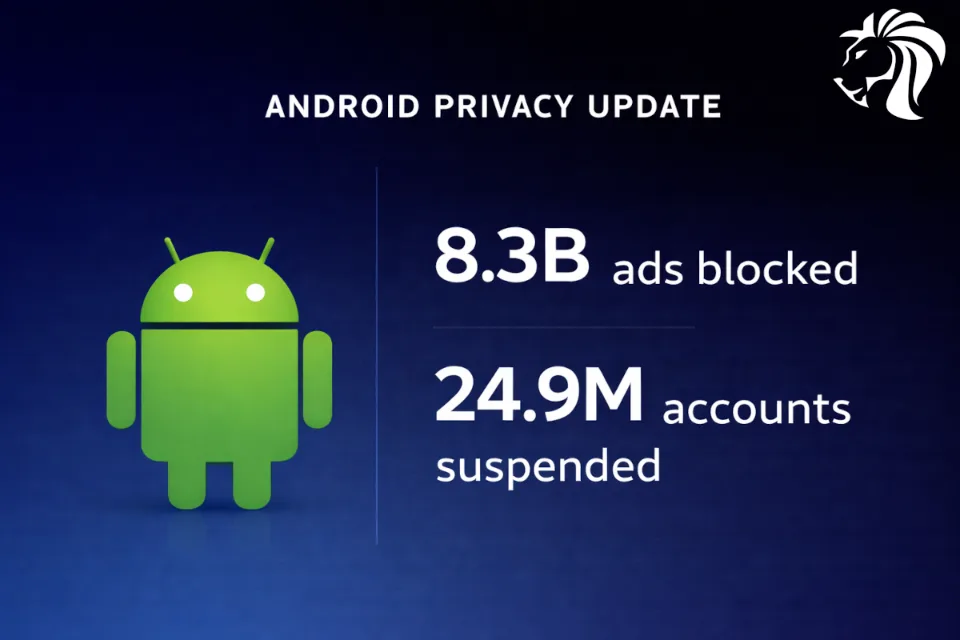
At the same time, the company revealed the scale of its security efforts:
🚨 8.3 billion ads blocked or removed
🚫 24.9 million accounts suspended in 2025
What’s changing in Android privacy?
Google is introducing more granular and user-controlled permissions in Android 17, focusing on two key areas:
- Contacts access
- Location data
Smarter contact access (Goodbye full access)
A new Contact Picker will replace broad access permissions.
Before:
- Apps used
READ_CONTACTS - Access to the entire contact list
Now:
- Users select specific contacts only
- Apps can request only required fields (e.g., phone or email)
👉 This significantly reduces unnecessary data exposure
Better control over location data
Google is also introducing a new location access model:
- One-time access to a precise location
- Clear user choice on when data is shared
- Persistent indicator when apps access location
👉 Users gain full visibility and control
New rules for developers
To comply with the new policies, developers must:
- Minimize permission usage
- Justify access to sensitive data
- Submit Play Developer Declarations for:
- Full contact access
- Persistent location tracking
📅 Key timeline:
- Policy enforcement begins in 2026
- Pre-review checks start October 27, 2026
Secure app ownership transfers
Google is also tackling fraud in app ownership:
👉 Introducing native account transfer in Play Console
Why it matters:
- Prevents account hijacking
- Blocks unsafe practices like:
- Credential sharing
- Buying/selling developer accounts
📅 Recommended from: May 27, 2026
AI vs malvertising: Gemini steps in
Google is using its Gemini AI model to fight malicious ads.
Results in 2025:
- 🚫 99% of bad ads blocked before reaching users
- 🧹 602 million scam-related ads removed
- 👤 4 million scam-related accounts banned
- 🌐 480 million malicious pages actioned
👉 AI now detects intent, not just keywords — making it far more effective
The growing threat
Google highlights a major concern:
Attackers are using AI to generate deceptive ads at scale
This includes:
- Fake services
- Phishing campaigns
- Scam promotions
What this means
We’re seeing a major shift:
- More control for users
- Stricter rules for developers
- AI-driven defense at scale
At the same time:
👉 Attackers are evolving just as fast
Key takeaway
Privacy and security are becoming platform-level responsibilities — not just user choices.
Google’s latest updates show a clear direction:
- Minimize data exposure
- Increase transparency
- Use AI to fight AI-driven threats


