
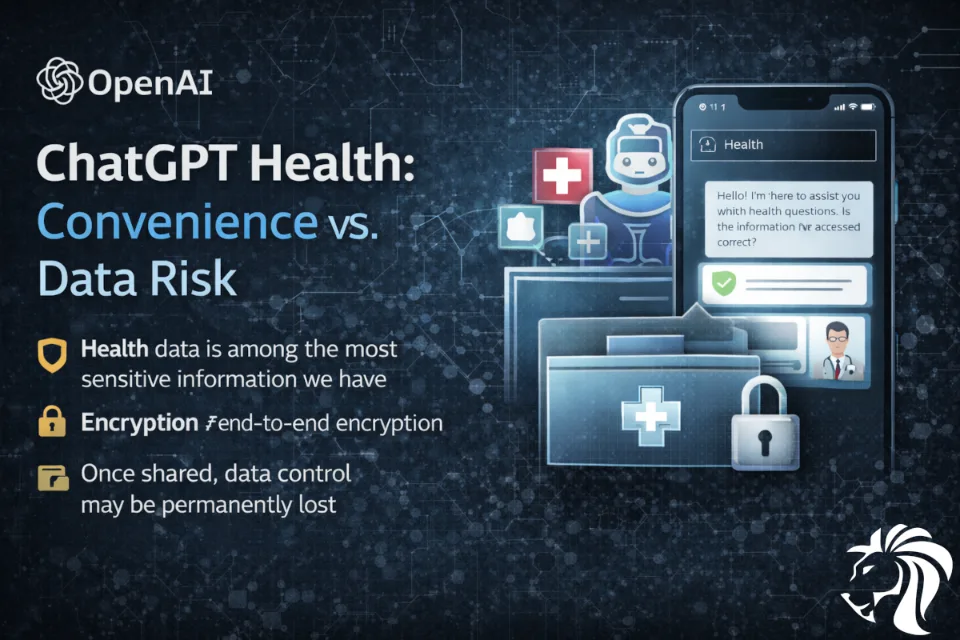
🩺🤖 OpenAI has announced ChatGPT Health, a dedicated consumer AI experience designed to help users navigate health questions by combining ChatGPT’s intelligence with personal health data.
According to OpenAI, the product introduces:
🔐 Purpose-built encryption
🧩 Data isolation for health conversations
🔑 MFA and additional access controls
📊 Optional integration with medical records and wellness apps
While this sounds reassuring, serious security and privacy concerns remain.
Why Caution Is Needed
• Users can connect medical records and third-party wellness apps, increasing exposure
• Conversations are encrypted in transit and at rest, but not end-to-end encrypted
• Once data is shared, true deletion is often impossible
• AI systems remain vulnerable to hallucinations, prompt injection, and misuse
• Regulatory protections (e.g. HIPAA / GDPR) are unclear for consumer use
Digital rights organizations warn that consent alone is not sufficient in complex data-sharing ecosystems — especially when health data is involved.
Regulatory & Trust Gaps
Notably, ChatGPT Health will not initially launch in the EU, UK, or Switzerland, where stricter privacy laws apply — raising questions about:
• Data minimization
• Purpose limitation
• Human rights and consumer protections
Bottom Line
AI health assistants may offer convenience and education — but they should never replace medical professionals, and users must understand the trade-offs before sharing deeply personal health information.
📌 Health data requires the highest possible security standard — and zero blind trust.


