
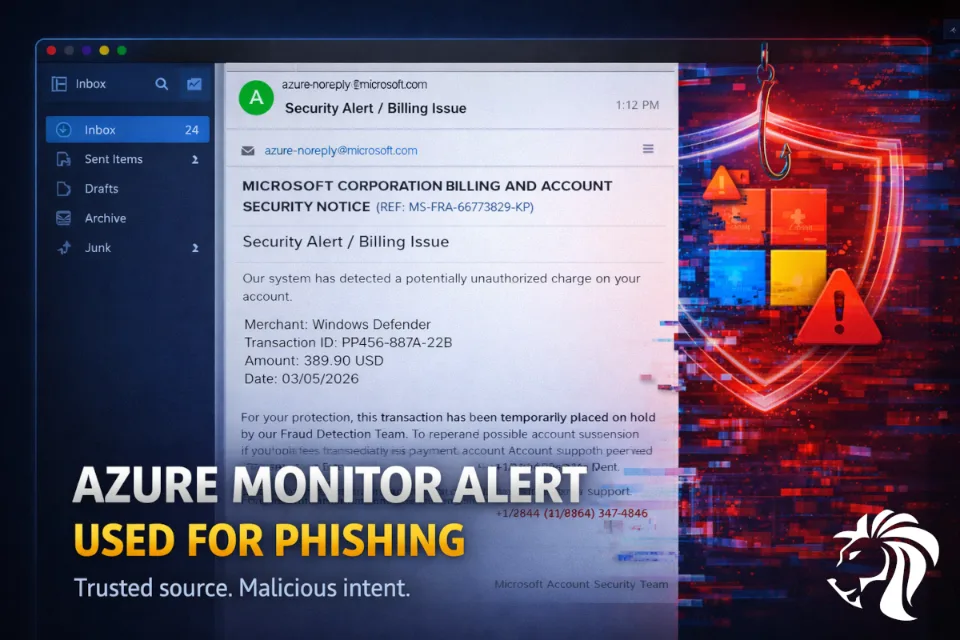
Cybercriminals are increasingly leveraging legitimate cloud services to bypass traditional security controls. The latest example involves Microsoft Azure Monitor, which is now being abused to deliver highly convincing callback phishing emails.
What’s happening?
Attackers are using Azure Monitor’s alerting functionality to send emails that appear to come directly from Microsoft, warning recipients about unauthorized charges or suspicious billing activity.
A typical message might include:
- A fake transaction (e.g., $389.90 Windows Defender charge)
- A fabricated reference number
- A sense of urgency (“verify immediately to avoid suspension”)
- A phone number to call
The key difference from traditional phishing?
These emails are not spoofed.
They are sent from a legitimate Microsoft infrastructure using:👉 azure-noreply@microsoft.com
Why this is dangerous
Because the emails originate from Microsoft’s own platform, they:
- ✅ Pass SPF, DKIM, and DMARC checks
- ✅ Appear fully legitimate in email headers
- ✅ Bypass many spam filters
- ✅ Increase user trust significantly
This makes the attack far more effective than standard phishing campaigns.
How the attack works
Threat actors exploit a simple but powerful feature:
Azure Monitor allows users to define custom alert descriptions.
Attackers:
- Create alert rules (e.g., invoice, payment, system events)
- Insert a malicious phishing message into the alert description
- Configure alerts to send emails to controlled distribution lists
- Forward these alerts to targeted victims
Because Azure generates the email, it retains the authentic Microsoft security headers.
Social engineering at its best
The campaign relies heavily on urgency and fear:
“Unauthorized charge detected… contact support immediately”
Victims who call the number may be:
- Tricked into revealing credentials
- Asked to approve fraudulent payments
- Guided to install remote access tools
- Targeted for deeper corporate network compromise
Why enterprises should care
This campaign uses enterprise-style alerts, suggesting a focus on:
- Corporate users
- Finance or IT departments
- Initial access for follow-on attacks
It highlights a growing trend:
👉 Trusted cloud platforms are becoming attack delivery channels
How to stay protected
To reduce risk, organizations should:
1. Treat alerts with caution
Any Microsoft or Azure alert that includes:
- A phone number
- Urgent billing action requests
should be considered suspicious
2. Verify through official channels
Never call numbers provided in emails
Instead:
- Log into Azure portal directly
- Contact Microsoft through official support
3. Train users on “legitimate-looking” phishing
Employees must understand that:
- Passing SPF/DKIM ≠ safe
- Trusted sender ≠ trusted message
4. Monitor internal alert configurations
If using Azure Monitor:
- Audit alert rules and descriptions
- Restrict who can create or modify alerts
- Review unusual notification patterns
Key takeaway
This campaign is a strong reminder that:
Even legitimate platforms can be weaponized for phishing.
Security is no longer just about detecting fake emails —
it’s about understanding how trusted systems can be abused.


