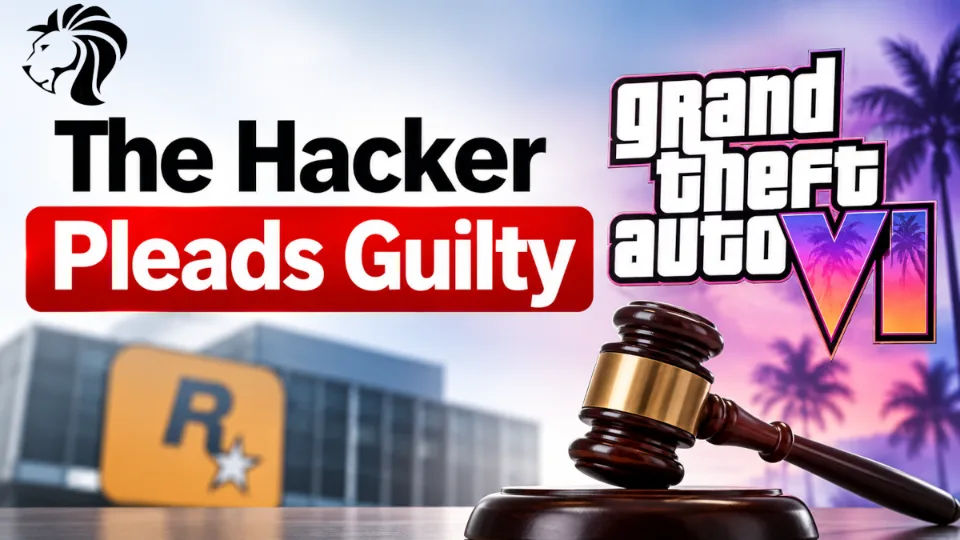
Kurtaj's offences date back to 2021 and 2022, when he was a teenager and part of Lapsus$, a group known for targeting large technology and telecommunications firms. At the time of the Rockstar breach, he was already on bail for other hacking offences and was under police protection.
According to the Crown Prosecution Service and media reports of the hearing, he pleaded guilty to six offences in total. These cover the Rockstar hack, attacks on BT/EE, Revolut and Uber, possessing a mobile phone in prison and assaulting staff while in custody. The Rockstar charge was hacking with intent to commit blackmail.
Date | Event |
|---|---|
2021 to 2022 | Lapsus$ attacks on BT/EE, Uber and other targets, as reported in the case |
2022 | Rockstar breach. Access to internal Slack channels, roughly 90 GTA VI clips and some source code taken |
2022 | Extortion attempt. Rockstar does not comply, and material is posted online under a pseudonym |
January 2026 | Kurtaj moves from a secure hospital to a conventional prison after a reassessment finds him fit to stand trial |
16 November 2026 | Guilty pleas at Woolwich Crown Court |
23 November 2026 | Sentencing date |
How the breach reportedly worked
Media reports, drawing on the court's account, say the attack was a phishing operation carried out from a hotel room. Kurtaj reportedly used an Amazon Fire TV Stick connected to the room's television, along with a Bluetooth keyboard and mouse, because his own computer had been seized.
Once inside, he accessed Rockstar's internal Slack workspace. Reports do not describe how the initial credentials were obtained beyond phishing. For a security team, the central lesson is that internal collaboration tools hold sensitive material, and that a single compromised account can expose it quickly.
Why the sentence and the plea matter for security teams
The case is unusual because the offender was a teenager when he committed the offences and was later assessed as unfit to stand trial. That history does not change the technical lesson, but it does show how long criminal cases can take, particularly when a defendant's ability to take part in proceedings is in question.
The case also shows the gap between how a breach is discovered and how it is resolved. The public learned of the Rockstar breach in 2022. The guilty plea came more than four years later. Organisations should expect that a breach investigation and any prosecution may run for years, and keep their evidence and records accordingly.
The cost and the figures
Rockstar says the breach cost about $5 million, plus thousands of hours of staff time, to recover from. Some media reports cite different figures for the total damage across all of Kurtaj's offences, including a claim of about £10 million across several companies.
What organisations should do
Three practical steps follow from this case.
Protect internal collaboration platforms. Require multi-factor authentication for all staff accounts, restrict access to sensitive channels, and monitor for unusual logins from unfamiliar devices or locations.
Plan for extortion. Organisations should have an incident response plan that covers ransom or extortion demands, including who decides on a response, how to contact law enforcement, and how to communicate with staff and customers if data is published.
Limit what can leak. Keep unreleased material, such as game footage, design documents and source code, in restricted repositories with access logging, and review who has permission to download it.
The lesson
The Rockstar breach shows that a single compromised account in an internal workspace can expose valuable material, and that a determined attacker can use simple tools to do so. The most useful response is not a single technical fix. It is a combination of strong authentication, access control, monitoring and a plan for what to do when someone attempts extortion.